๐Ÿ“ž Call for a Free Quote: 877-308-1630

Wildfire Damage Restoration in San Diego, CA

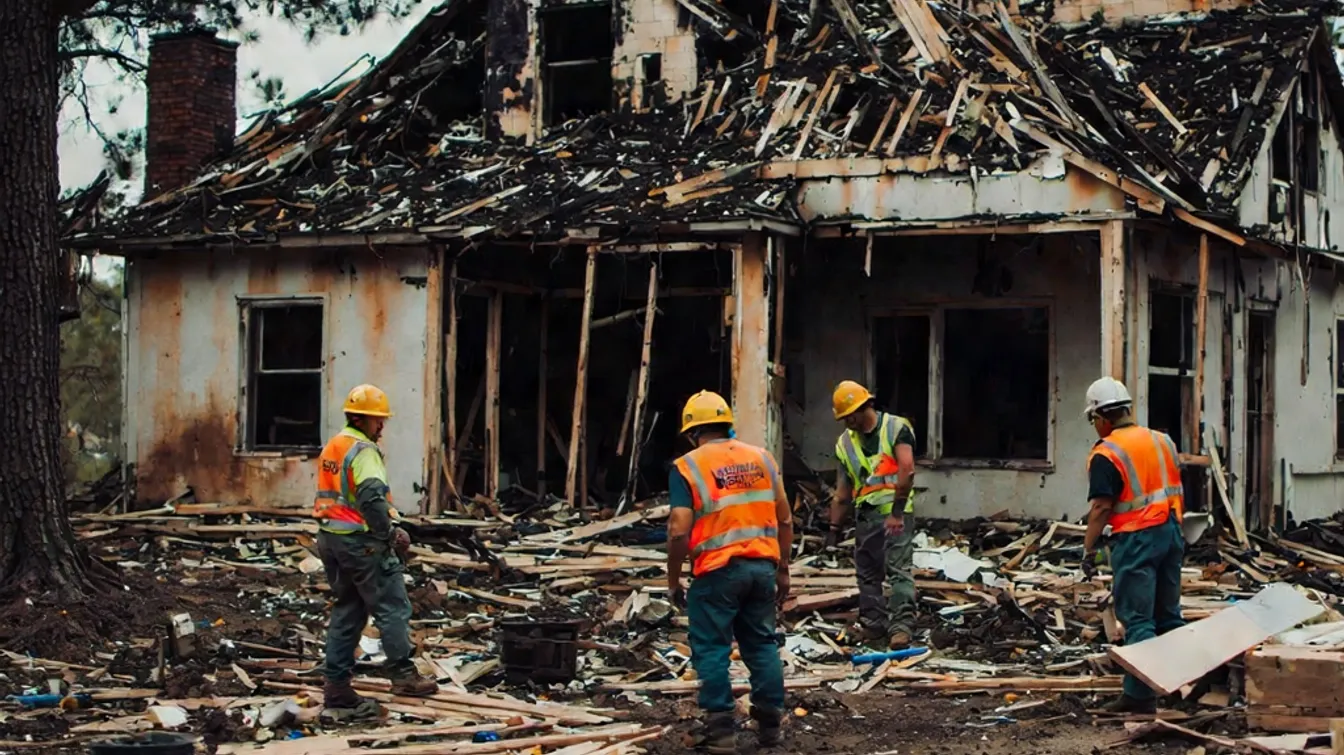
A restoration crew assessing a home destroyed by wildfire

San Diego County's wildfire history is significant โ€” the 2003 Cedar Fire burned roughly 280,000 acres and destroyed more than 2,200 homes, with Scripps Ranch among the communities hit hardest, and the 2007 Witch Fire forced nearly 500,000 people to evacuate across Ramona, Poway, Rancho Bernardo, Escondido, and Rancho Santa Fe. Santa Ana wind season, typically October through December, is when fire risk and smoke exposure both spike across the county, even for homes well outside the direct burn area.

Wildfire damage often looks different from a structure fire. A home doesn't have to be touched by flame to need restoration โ€” smoke and ash travel for miles on Santa Ana winds and work their way into attics, HVAC systems, and soft furnishings, and ash is corrosive enough that leaving it untreated continues to damage surfaces over time. We assess smoke and ash infiltration throughout the property, not just visible surfaces, since the damage frequently extends into spaces that look untouched at first glance.

For homes with direct fire damage โ€” exterior siding, roofing, decking, or landscaping burned or scorched โ€” we handle both the smoke and ash remediation and the structural repair as part of the same project.

๐Ÿ“ž Call 877-308-1630

Request This Service

* Indicates required field

San Diego County's Wildfire History

The Cedar Fire (2003) and Witch Fire (2007) remain two of the largest wildfires in California history and both directly affected San Diego County communities โ€” Scripps Ranch, Ramona, Poway, Escondido, Rancho Bernardo, and Rancho Santa Fe among them. That history is part of why we maintain wildfire-specific restoration capacity rather than treating every fire job as a standard house fire.

Ash and Smoke Damage Without Direct Fire Contact

A home miles from an active wildfire can still take on significant smoke and ash damage through open windows, HVAC intake, and simple air infiltration. That damage is real, insurable in many cases, and worth having assessed even when there's no visible fire damage to the structure itself.

How We Assess and Treat Ash and Smoke Infiltration

The process starts with an inspection that goes well beyond the rooms that look affected โ€” attic insulation, HVAC coils and ductwork, and interior closets are common places where wildfire ash and smoke settle without any obvious sign from the main living space. We use HEPA-filtered vacuums and air scrubbers to remove settled ash from surfaces without grinding its corrosive particles further into paint, wood, and fabric. Odor and fine particulate that have worked into HVAC systems and soft furnishings typically need thermal fogging or ozone treatment on top of surface cleaning, since ash carries the same lingering-odor problem as structure-fire smoke, just distributed more broadly across the property.

Equipment Suited to Ash, Not Just Soot

Wildfire ash behaves differently from structure-fire soot โ€” it's finer, more corrosive, and tends to be spread across a much larger surface area rather than concentrated near a point of origin. HEPA vacuums with specialized filtration capture the fine particulate without recirculating it into the air. Air scrubbers run during cleanup to manage airborne ash that gets disturbed during the process. For HVAC systems, we clean coils and ductwork specifically, since ash left inside a system corrodes components over time in addition to recirculating odor and dust through the home.

How Wildfire Smoke Damage Differs From a Structure Fire

A structure fire concentrates damage around a point of origin, with smoke traveling outward from there through ductwork and open doorways. Wildfire smoke and ash infiltration works the opposite way โ€” it enters from outside through windows, vents, and simple air infiltration, and can affect a home that never had any direct flame exposure at all. That means the assessment for a wildfire-related job looks less for a point of origin and more for infiltration paths: which vents, windows, and gaps let smoke and ash inside, and how far it traveled once it got there.

Insurance Considerations for Smoke-Only Wildfire Claims

Homeowners are sometimes surprised that a home with no visible fire damage can still have a valid, insurable claim โ€” but ash and smoke infiltration from a nearby wildfire is a real, often covered form of property damage. The challenge is usually proving the extent of it, since there's no burned structure for an adjuster to point to. We document ash presence in attics, ductwork, and HVAC filters with photos and, where warranted, third-party air quality or particulate testing, which gives the claim the kind of evidence a purely visual walkthrough wouldn't capture on its own.

Rebuilding to Current Wildfire-Zone Codes

For homes with direct fire damage requiring reconstruction, California's Chapter 7A building code standards for wildland-urban interface zones often apply to the rebuilt portions โ€” ember-resistant vents, fire-rated roofing and siding materials, and enclosed eaves, among other requirements. Whether those upgrades are required depends on the property's specific fire-hazard zone designation and the scope of what's being rebuilt, which is something we confirm with the local building department rather than assume applies uniformly across the county.

A Common Misconception About Wildfire Damage

Because wildfire coverage often gets attention only after a major, headline event like the Cedar or Witch Fire, homeowners sometimes assume smoke exposure only counts as damage when a fire actually reached their neighborhood. In practice, Santa Ana winds carry smoke and ash tens of miles from an active fire, and infiltration into a home's attic or HVAC system doesn't require the fire to have come anywhere close. Waiting to see visible soot before requesting an assessment often means ash has already had more time to become corrosive and harder to fully remove.

Defensible Space and Reducing Future Risk

California's defensible space requirements establish zones around a structure โ€” generally an ember-resistant zone immediately adjacent to the home and a wider zone with reduced vegetation density further out โ€” aimed at giving a structure a better chance of surviving an approaching wildfire. While defensible space work itself isn't part of our restoration scope, we often point homeowners toward it after a wildfire-related restoration job, since a property that's already been through one smoke or ash event is a useful reminder to address the vegetation and structural vulnerabilities that make a repeat event more damaging.

Air Quality Considerations During Ash Cleanup

Wildfire ash contains fine particulate matter that's a genuine respiratory concern during cleanup, not just a cosmetic issue, which is why our crews use appropriate respiratory protection and containment during ash removal rather than treating it like ordinary household dust. We also advise occupants to stay clear of active work areas during ash remediation and to run HVAC systems on filtered settings, where available, until cleanup and duct servicing are complete, since re-entering a space too early during active particulate cleanup isn't worth the health tradeoff for a slightly faster timeline.

Areas We Serve

Proudly providing fire damage restoration across the region:

Get Wildfire Damage Restoration in San Diego Today

Fast response, upfront pricing, and friendly local pros. Call now for a free quote.

๐Ÿ“ž Call 877-308-1630