๐Ÿ“ž Call for a Free Quote: 877-308-1630

Kitchen Fire Restoration in San Diego, CA

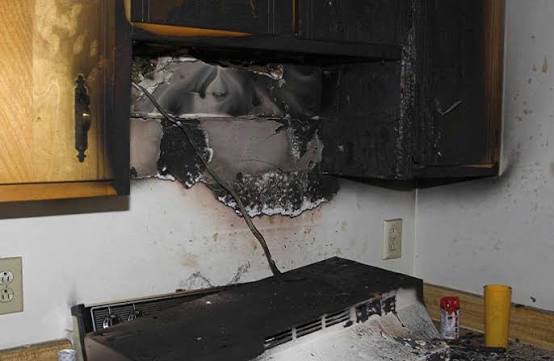
A burned kitchen range hood and cabinet after a stovetop fire

Kitchen fires are the most common type of house fire we respond to, and grease fires in particular leave a specific kind of mess โ€” thick, oily soot that's harder to remove than dry-burn soot from a wood or paper fire, and that spreads surprisingly far from the point of origin through kitchen ventilation and open doorways into adjoining rooms.

Our kitchen fire restoration addresses that oily residue specifically, using cleaning methods suited to grease-based soot rather than a generic approach that leaves a greasy film behind on cabinets, countertops, and walls. We also address smoke odor, which tends to be more persistent after a kitchen fire because cooking odors and smoke odor compound each other, and clean or replace ventilation components that trapped smoke and grease during the fire.

For kitchens where cabinets, countertops, or appliances are damaged beyond cleaning, we handle replacement and rebuild as part of the same project, working from the same documentation used for your insurance claim.

๐Ÿ“ž Call 877-308-1630

Request This Service

* Indicates required field

Why Grease Fire Soot Is Different

Protein-based and grease-based soot from cooking fires is oily and tends to smear rather than wipe away with standard cleaning, and it bonds more aggressively to surfaces the longer it sits. We use degreasing agents and cleaning methods specific to this kind of residue rather than treating it like standard dry-smoke soot.

How We Approach a Kitchen Fire Step by Step

We start by identifying exactly what burned and for how long, since a flash grease fire that self-extinguished in sixty seconds leaves a very different footprint than one that burned for several minutes before an extinguisher or the fire department knocked it down. Ventilation gets checked first โ€” the range hood, ductwork, and any path to adjoining rooms โ€” because that's how oily smoke travels furthest from the point of origin. Degreasing and soot removal come next, worked from the ceiling down so residue isn't dragged onto already-cleaned surfaces. Odor treatment follows once surfaces are clean, and any cabinets, countertops, or appliances beyond saving get scoped for replacement as part of the same job.

Signs the Damage Traveled Further Than the Stove

Grease-laden smoke doesn't stay put the way people expect. Check the inside of cabinet doors near the fire โ€” a thin oily film there usually means residue has already worked into the wood grain, not just the surface finish. A film on dining room or hallway light fixtures often means smoke traveled further than it looks like it should have. And a burning smell that returns whenever the oven or range hood runs points to residue trapped inside the ductwork itself, which surface cleaning in the kitchen won't fix.

What Drives Cost on a Kitchen Fire Claim

Cabinet material matters more than people expect โ€” laminate and thermofoil cabinets near the stove often need replacing once heat has warped or delaminated the surface, while solid wood cabinets further from the fire can frequently be cleaned and refinished. Appliance age plays a role too, since an older range or microwave with heat or smoke exposure to internal electronics is more often a replacement than a repair. If the fire triggers a kitchen remodel-level scope, some jurisdictions require updated GFCI outlets or code-current wiring as part of the rebuild, which is worth flagging to your adjuster before the estimate is finalized rather than after.

Common Mistakes After a Small Kitchen Fire

The biggest one is treating a contained flare-up as a non-event because the flames went out quickly. Oily soot spreads on convection currents the moment it's created, regardless of how fast the fire itself was extinguished, and it darkens and sets into surfaces over the following days if it isn't addressed. Mixing bleach and ammonia-based cleaners while trying to scrub soot is a genuine safety hazard, not just an ineffective one โ€” that combination produces toxic fumes. And painting over lingering smoke odor without removing the residue underneath is a short-term fix at best; the odor typically bleeds back through paint within weeks.

When a Kitchen Fire Triggers a Full Remodel

Sometimes the honest scope of repair work ends up looking a lot like a kitchen remodel โ€” new cabinets, countertops, flooring, and appliances, especially when the fire started at the stove and burned long enough to affect the surrounding run of cabinetry. When that's the case, we coordinate directly with cabinet and countertop vendors on measurements, materials, and lead times as part of the project rather than treating that coordination as the homeowner's separate problem to manage. Matching existing cabinetry that's no longer in production is a common wrinkle here, and we flag that possibility early rather than after a partial-replacement plan is already underway.

Living Without a Kitchen During Repairs

A kitchen fire that requires more than a few days of cleaning can leave a household without a functional kitchen for weeks, which is a different kind of disruption than most other rooms in the house. We scope kitchen jobs with that timeline pressure in mind, sequencing work to restore basic function โ€” water, a working refrigerator space, counter space โ€” as early in the project as the actual damage allows, rather than treating the whole kitchen as inaccessible until the very last finish item is complete.

Checking the Ventilation System Before Calling It Done

A kitchen fire restoration isn't complete until the range hood, ductwork, and any makeup air components have been inspected and cleaned, not just the visible cabinetry and countertops. A hood or duct system that still has grease and soot residue inside it continues to be both an odor source and, longer term, a fire risk of its own, which is why we treat ventilation system cleaning as a required closing step on kitchen jobs rather than an optional extra.

Kitchen Fire Restoration FAQs

Can my cabinets be cleaned instead of replaced after a grease fire?

It depends on the material and how close they were to the point of origin. Cabinets directly above or beside the stove often have scorched finish or heat-warped material that needs replacing, while cabinets further away with only smoke and grease exposure can frequently be cleaned and refinished rather than torn out.

Why does my kitchen still smell like smoke after I've scrubbed everything?

Grease-based soot from a cooking fire is oily and works its way into porous materials โ€” cabinet interiors, particleboard cores, and ventilation ductwork โ€” in a way that surface wiping doesn't reach. That trapped residue keeps releasing odor until it's actually removed rather than just cleaned on the surface.

Is a small stovetop fire really worth calling a restoration company for?

Often, yes. Even a fire that self-extinguishes in a pan spreads oily smoke through the kitchen's ventilation and into adjoining rooms, and that residue can be invisible at first and darken or smell stronger over the following days as it sets into surfaces.

Areas We Serve

Proudly providing fire damage restoration across the region:

Get Kitchen Fire Restoration in San Diego Today

Fast response, upfront pricing, and friendly local pros. Call now for a free quote.

๐Ÿ“ž Call 877-308-1630