๐Ÿ“ž Call for a Free Quote: 877-308-1630

Fire Damage Water Extraction & Structural Drying in San Diego, CA

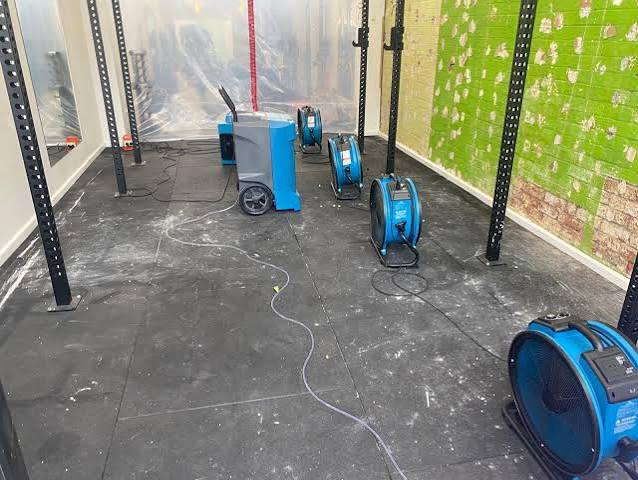
Industrial air movers and a dehumidifier drying out a fire- and water-damaged commercial space

Every structure fire that firefighters actively extinguish involves significant water โ€” hundreds or thousands of gallons, depending on the size of the fire โ€” and that water goes everywhere the fire did and often further, soaking into flooring, subfloors, drywall, and insulation. It's common for homeowners to focus entirely on the visible fire damage and not realize the water left behind is its own serious problem with its own clock running.

In Southern California's climate, mold risk begins within roughly 24 to 48 hours of water intrusion, which means water extraction and structural drying need to start immediately, often before the insurance claim is even fully underway. We extract standing water, use moisture meters to identify how far water has traveled into building materials โ€” often further than visibly wet areas suggest โ€” and set up industrial drying equipment monitored until moisture levels return to normal.

Skipping or rushing this step is one of the most common reasons a fire-damaged home develops a secondary mold problem weeks after the fire itself is old news, turning what could have been a straightforward restoration into a more complicated and expensive one.

๐Ÿ“ž Call 877-308-1630

Request This Service

* Indicates required field

The 24-48 Hour Mold Window

Mold spores are present in virtually every environment and begin colonizing wet organic materials โ€” wood, drywall paper, insulation โ€” within one to two days in warm, humid conditions. Getting ahead of that window with fast extraction and proper drying is significantly cheaper and less invasive than addressing mold growth after the fact.

The Extraction and Drying Process

Extraction comes first โ€” truck-mounted or portable extraction equipment removes standing and pooled water before any drying equipment goes in, since trying to dry a space with visible standing water still present is both slower and less effective. Moisture mapping follows, using penetrating and non-penetrating moisture meters to identify exactly which materials are wet and how far water traveled into walls, subfloor, and framing, often well beyond what's visible at the surface. Drying equipment โ€” air movers and dehumidifiers sized to the affected square footage โ€” then runs continuously, with moisture readings taken daily until materials return to a normal, dry-standard range.

Equipment That Does the Actual Drying

Air movers create airflow across wet surfaces to accelerate evaporation, positioned and angled based on where moisture mapping shows the wettest materials. Low-grain refrigerant (LGR) dehumidifiers pull moisture out of the air the movers just put into it, which is what actually removes water from the structure rather than just circulating damp air around a room. Moisture meters and, on larger jobs, hygrometers monitor both material moisture content and ambient humidity throughout the drying period, since drying equipment left running past the point materials are actually dry wastes time and can occasionally cause its own problems with wood materials drying too aggressively.

Signs Water Traveled Further Than It Looks

Baseboards that feel soft or separate slightly from the wall often indicate water wicked up behind them well past the visibly wet flooring. A musty smell in a room that looks dry usually means moisture is still trapped inside wall cavities or under flooring where it isn't visible. Cupping or buckling in wood flooring some distance from the original wet area is common, since water travels along subfloor seams and can surface as visible flooring damage in a spot that looks unrelated to where the fire actually was.

How This Differs From Standard Water Damage

Water used to fight a fire isn't the clean water of a burst pipe โ€” it typically carries soot, ash, and combustion byproducts, which the IICRC classifies as more contaminated water requiring different handling and, in some cases, different disposal considerations for extracted water and removed materials. That contamination is also part of why porous materials soaked with firefighting water โ€” carpet padding, insulation, particle-board cabinetry โ€” are more often removed and replaced rather than dried and reused, unlike a clean-water loss where drying in place is more commonly the standard approach.

Why This Follows the IICRC S500 Standard

The IICRC S500 Standard for Professional Water Damage Restoration governs how extraction, drying, and moisture verification are supposed to be documented and performed, and it's the standard our technicians are trained to and that most insurance carriers expect to see reflected in a restoration company's documentation. That documentation โ€” daily moisture logs, equipment placement records, and final dry-standard verification โ€” is also what supports the claim that drying was actually completed correctly rather than assumed complete once equipment was removed.

Insurance Documentation for the Drying Phase

Adjusters and carriers generally want to see more than a start and end date for the drying phase โ€” daily moisture readings showing a consistent downward trend toward a dry standard are what demonstrate drying was actually monitored and completed, not just assumed. We log moisture content by room and material type throughout the drying period specifically so that documentation exists if a mold claim or dispute over drying completeness ever comes up months after the visible restoration work is finished.

The Cost of Stopping Drying Too Early

Pulling drying equipment before materials actually reach a dry standard is one of the more expensive mistakes in this part of restoration, because trapped moisture that looks resolved on the surface often isn't resolved inside wall cavities or under flooring. Mold remediation months later, after a family has moved back in and finished cosmetic repairs, generally costs significantly more and causes more disruption than an extra few days of drying equipment would have. We don't remove drying equipment based on a schedule โ€” we remove it based on moisture readings actually hitting target.

Antimicrobial Treatment as a Preventive Step

On jobs where materials were wet for more than a day or two before mitigation began, or in cases with elevated humidity throughout the drying period, we sometimes apply an antimicrobial treatment to framing and other structural materials as a preventive measure against mold growth, even when no visible mold is present yet. This isn't a standard step on every job โ€” it's based on how long materials were wet and the conditions during that time โ€” but it's a lower-cost preventive measure compared to addressing an actual mold problem that develops weeks after the visible restoration work looks finished.

Protecting Furniture and Contents During Active Drying

Furniture left in place during drying gets blocked up on foam blocks or pads to prevent trapped moisture between the item and a wet floor, and area rugs or textiles get moved off wet flooring entirely rather than left to dry in place, since prolonged contact with a damp subfloor can transfer staining and odor both ways. Where furniture can't be moved out of the drying zone, we position air movers to include it in the airflow pattern rather than leaving it as an isolated damp spot the rest of the room dries around.

Areas We Serve

Proudly providing fire damage restoration across the region:

Get Fire Damage Water Extraction & Structural Drying in San Diego Today

Fast response, upfront pricing, and friendly local pros. Call now for a free quote.

๐Ÿ“ž Call 877-308-1630