๐Ÿ“ž Call for a Free Quote: 877-308-1630

Contents Cleaning & Pack-Out in San Diego, CA

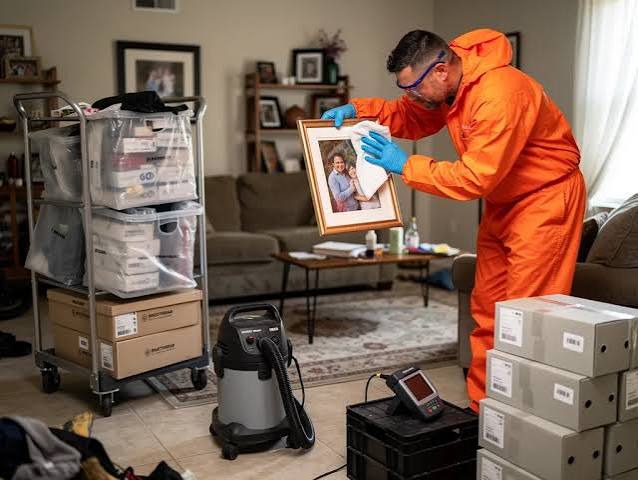
A technician in protective gear carefully cleaning a family photo during a contents pack-out

Not everything touched by smoke or soot needs to be thrown away, but figuring out what can actually be cleaned and restored versus what needs to be replaced isn't always obvious from a quick look โ€” smoke odor in particular can be deceiving, since a piece of furniture can look fine and still hold odor deep in its cushioning or fabric.

For items that can stay in place, we clean on-site. For items that need more intensive treatment โ€” deep smoke odor, delicate materials, electronics that need specialized cleaning โ€” we pack out belongings, transport them to our facility for treatment, and return them once the restoration is complete and the space is ready. This also gets belongings out of the way of the drying and reconstruction process, which speeds up the rest of the job.

We inventory and document everything during pack-out, both for your own records and because that documentation matters for insurance claims involving contents, which are often assessed separately from structural damage.

๐Ÿ“ž Call 877-308-1630

Request This Service

* Indicates required field

What Usually Can Be Saved vs. Replaced

Hard surfaces, most furniture, and many electronics can often be cleaned and restored if smoke exposure wasn't prolonged or extreme. Items with heavy direct fire or heat damage, or porous materials that absorbed heavy smoke odor over an extended period, are more often replacement candidates โ€” we'll give an honest assessment item by item rather than a blanket recommendation.

How Pack-Out and Contents Cleaning Actually Works

Every item gets photographed and logged before it leaves the property, creating an inventory that supports both our own tracking and your insurance claim's contents portion, which is typically assessed separately from structural damage. Items are then sorted by treatment need โ€” hard surfaces and durable items for on-site or facility cleaning, textiles and soft goods for specialized treatment, and electronics for a separate assessment process, since water, heat, and smoke exposure each affect electronics differently. Once treated, items are stored at our facility until the space is ready, then returned and matched back against the original inventory.

Equipment for Deep Contents Cleaning

Ultrasonic cleaning tanks use high-frequency sound waves to lift soot and grime out of intricate items โ€” jewelry, small electronics housings, decorative objects โ€” that hand cleaning can't fully reach into. Ozone chambers treat smoke odor in items that can't be effectively fogged in place, sealing them in a controlled environment where ozone breaks down odor-causing particles more thoroughly than open-air treatment allows. For electronics specifically, cleaning happens in an ESD-safe (electrostatic discharge-safe) environment, since static discharge during handling can damage components that survived the fire and smoke exposure itself.

Items That Need Special Handling

Photographs and paper documents are among the most fragile items we handle โ€” smoke residue and moisture both threaten them, and improper drying can cause irreversible damage, so these often go through a slower, more careful treatment process than furniture or hard goods. Textiles and upholstered furniture can trap odor deep in fibers and padding in a way that's invisible until the item warms up or gets compressed, which is why we treat rather than just spot-clean anything with significant smoke exposure. Artwork, especially anything with an oil or acrylic surface, needs assessment by someone familiar with the medium before cleaning, since standard techniques can damage the surface.

Electronics: Often Salvageable, Rarely Obvious

A homeowner's instinct after a fire is often to assume any electronics near the fire are a total loss, but many survive smoke and even some heat exposure if they're professionally cleaned before corrosive soot residue has time to damage internal components. The real risk with electronics isn't usually the fire itself โ€” it's waiting too long to have them assessed, since soot is acidic and continues corroding circuit boards and contacts the longer it sits untreated. We recommend having electronics evaluated even when they look intact, since visible condition doesn't reliably predict whether internal components have been compromised.

How Contents Claims Work With Your Insurance

Most homeowner policies separate contents coverage from structural (dwelling) coverage, with its own coverage limit and its own claim process, which means the documentation for contents needs to stand on its own rather than being folded into the structural estimate. Depending on your policy, contents may be covered at actual cash value (depreciated for age and condition) or replacement cost value, and that distinction significantly affects what you're reimbursed for damaged or destroyed items. We provide the itemized, photographed inventory that supports either valuation method, so the claim isn't slowed down by missing documentation.

A Common Misconception About What's Salvageable

It's easy to assume that anything touched by smoke needs to be thrown out, or conversely, that anything that still looks fine must be fine โ€” neither assumption holds up well in practice. Some heavily soot-covered hard-surface items clean up completely with the right process, while some lightly smoke-exposed soft goods retain odor no amount of cleaning fully resolves. We give an honest, item-by-item assessment rather than a blanket rule, because treating every item the same way usually means either throwing away things that could have been saved or spending money trying to save things that were never going to come clean.

How Long Contents Typically Stay in Storage

Storage duration depends entirely on how long the structural side of the job takes, since contents generally don't go back into a space until it's clean, dry, and ready for move-in. A straightforward cleaning-only job might mean a few weeks of off-site storage, while a job involving reconstruction can mean months. We keep an inventory system that tracks exactly what's in storage and its treatment status throughout that period, so nothing gets lost track of on a longer job, and we coordinate return scheduling with the reconstruction timeline rather than defaulting to a fixed date that may not match when the space is actually ready.

When an Item Can't Be Restored

Not everything can be saved, and being honest about that upfront matters more than attempting a cleaning process that was never going to work. For items beyond restoration, we document their condition thoroughly โ€” photos, notes on the extent of damage, and why the item wasn't salvageable โ€” since that documentation supports the total-loss claim for that item on the contents portion of your policy. For sentimental or irreplaceable items specifically, we make every reasonable attempt at restoration before recommending a total loss, since some techniques that seem unlikely to work on paper occasionally save an item that matters more than its dollar value would suggest.

Areas We Serve

Proudly providing fire damage restoration across the region:

Get Contents Cleaning & Pack-Out in San Diego Today

Fast response, upfront pricing, and friendly local pros. Call now for a free quote.

๐Ÿ“ž Call 877-308-1630